Getting Started with Portrait Photography and Colour in Multiple Exposure Portraits

I thought I would write this blog because I have noticed that a lot of photography beginners feel intimidated by portrait photography. And this is such a shame, because portraits are one of the most evocative, expressive, and rewarding subjects to work with.
They are especially powerful when used for multiple exposure photography, where colours, textures, and shapes merge into something that feels more like a painting than a photograph. With just a few thoughtful layers, you can transform a simple portrait into a piece of art.
Portraits are often seen as a bit of a dark art, but they don’t have to be. You don’t need a professional studio or a professional model. You can simply ask a friend, a partner, or a family member to pose for you. What matters is how you see the subject, how you use light, and how you connect with the person in front of your lens.
For the photos in this blog, the model was Janina Wilde (a multiple exposure expert who is hosting my Multiple Exposure Portraits online course in her Wilde Photography Academy 😊).
Working With Natural Light
For this session, I kept everything incredibly simple. These portraits were shot indoors using natural window light. I didn’t even use a reflector for most of them. This was an intentional choice, as I wanted to show that you don’t need a complicated setup or expensive equipment to take beautiful portraits. Any camera will do. What matters is understanding the basics.
So here are some Useful Tips to Improve Your Portrait Photography:
1. Use Natural Light Effectively
Light is everything in portrait photography. Pay attention to:
• the type of light (soft, diffused window light is perfect for indoor portraits),
• the direction (side light adds depth; front light feels gentle and flattering).


Even small adjustments, like turning your subject slightly or moving closer to the window, can completely transform your results.
2. Pay Attention to the Background
One of the most common beginner mistakes is photographing someone against a messy or distracting background. When the background is busy, your subject gets visually “lost”. Keep it simple. Clean walls, soft curtains, or even a shaded corner of a room can work beautifully.
3. Know Your Camera Settings
You don’t need to understand every single button on your camera, but getting comfortable with a few key settings will instantly improve your portraits.
• Use a wide aperture (such as f/1.8–f/2.8) for a shallow depth of field to create that beautiful blurry background. This helps your subject stand out and gives your portraits a more professional, polished feel.
• Choose a shutter speed fast enough to avoid motion blur. Even small movements from you or your subject can soften an image, so aim for at least 1/125s or faster when shooting handheld.
• Keep your ISO as low as the light allows to maintain clean, crisp images with minimal noise. Higher ISO can be useful in darker situations, but it also introduces grain.
• Aperture Priority mode is an excellent choice for natural-light portraits. It allows you to control the depth of field, while the camera automatically adjusts the shutter speed for proper exposure. This lets you stay focused on your subject rather than juggling multiple settings at once.
Mastering just these few controls can make your portraits look significantly more intentional and refined, without overwhelming you with technical complexity.
4. Pay Attention to Your Focal Length
This is something many beginners overlook, but it has a huge impact on how your subject looks.
• Shorter focal lengths (like 24–35mm) can distort the face slightly, making features appear wider or exaggerated and not always flattering.
• Focal lengths of 50mm, 85mm, or even 100mm+ produce a more natural, flattering perspective.
5. Connect With Your Subject
When shooting portraits, focus on the eyes. They are the emotional anchor of the image. Build a connection with your subject. Talk to them, make them feel comfortable, and give gentle direction. Portraits improve dramatically when the person feels relaxed and seen.

6. Slow Down
Beginners often feel awkward and rush to press the shutter. But good portraits require patience. Take your time. Breathe. Observe. Adjust. A thoughtful pace leads to thoughtful images.
7. Practice…
Portrait photography is a craft. The more you practice (especially with the same person or in the same spot), the better you learn to see light, emotion, and composition.
Once you get comfortable with simple, clean portraits, multiple exposure opens up a world of creativity.
Textures, colours, patterns, plants, architecture – you can layer almost anything over your portrait to create atmosphere and emotion.
Why Multiple Exposure Works So Well With Portraits
Portraits contain emotion, expression, and human presence, when you add additional layers, like floral patterns, abstract textures, geometric shapes, or even simple washes of colour, you create a visual dialogue between the external and internal. A portrait becomes a story.
Multiple exposure works beautifully when:
You want to add atmosphere or symbolism
Colours can underscore mood (warm for comfort, cool for introspection, bold for confidence), while textures can hint at complexity or softness.
You want a dreamy, artistic feel
Even subtle overlays can make a portrait feel ethereal or painterly.
You want to express something deeper than a single image can capture
Combining elements from nature, architecture, or abstract shapes allows the portrait to take on layers of meaning.
Because the possibilities are literally limitless, we will focus on colour in multiple exposure portraits.
Colour becomes one of your most powerful storytelling tools when creating multiple-exposure images. Even a simple portrait can shift entirely in mood depending on the colours you choose to blend into it.
• Warm colours (reds, oranges, yellows) add energy, passion, softness, and a sense of warmth or nostalgia.
• Cool colours (blues and greens) introduce calmness, tranquillity, or introspection.
• Muted, natural tones can produce earthy, grounded images.
• Bold, contrasting palettes create drama, tension, or a surreal quality.
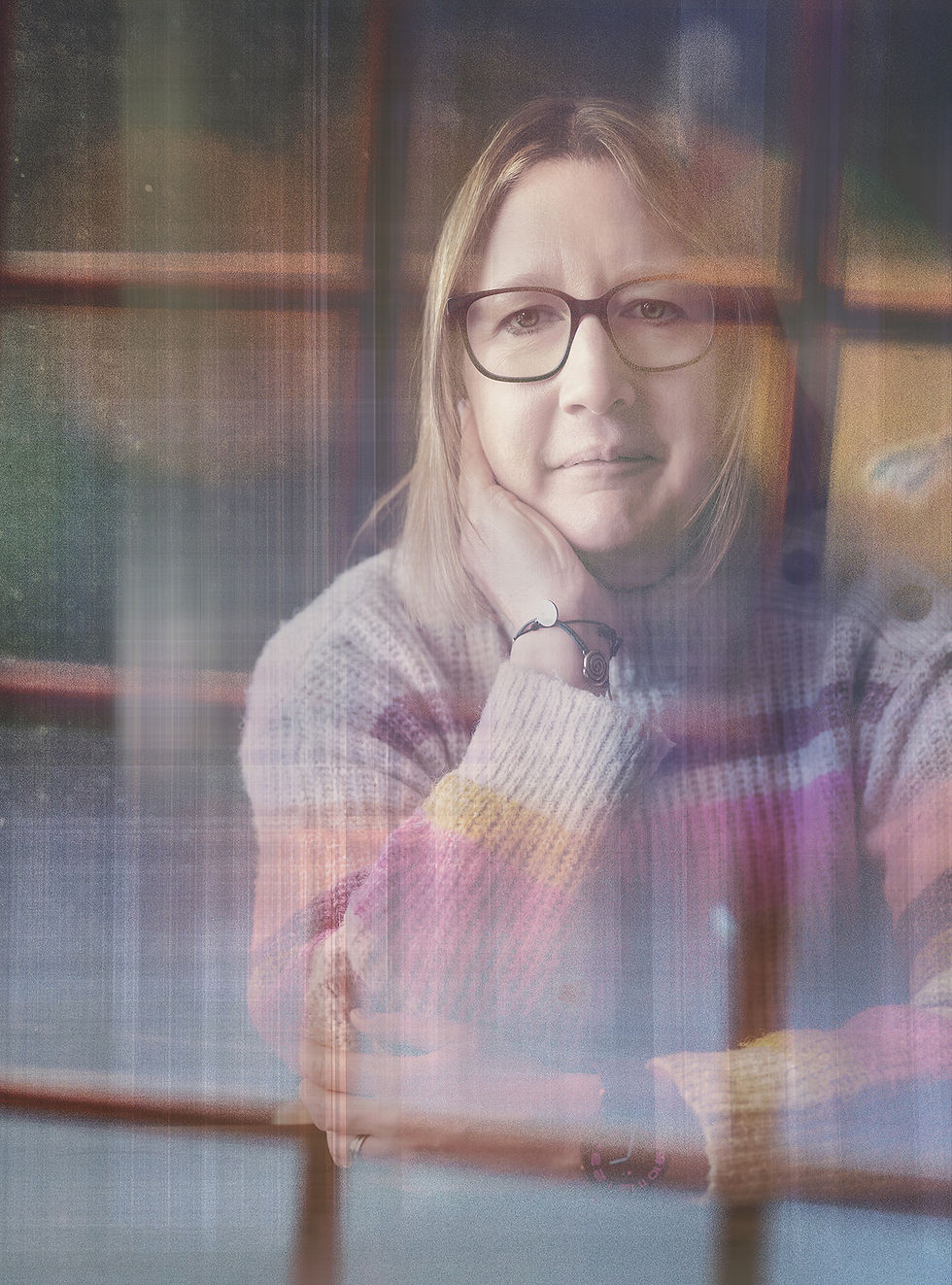
In our session, I explored soft overlays that enhanced the natural light we had, as well as bolder colour washes that introduced a more expressive, abstract feel. The beauty of multiple exposure is that you can dial the intensity up or down depending on the story you want the portrait to tell.
Here are some of the multiple-exposure portraits I created for this post. Each one began as a minimalist portrait and evolved into a more expressive, atmospheric image, becoming a blend of photography, intuition, and a little bit of magic 😊.


Thank you for being here, and for being a part of this creative journey.
These approaches are explored in more detail in my Multiple Exposure Portraits online course, which focuses on building confidence with portraiture, light, and layered photographic techniques step by step. If you would like to explore other types of multiple exposure photography courses, check out Wilde Photography Academy.
— Olena


Comments